Gum Arabic Buyer Specification and Supplier Questionnaire Templates
Download editable templates for defining a gum arabic requirement and comparing supplier identity, processing, evidence, packaging and commercial terms.
Open tool ↗Clear, application-aware guides for buyers evaluating gum arabic, Acacia senegal and bulk supply.
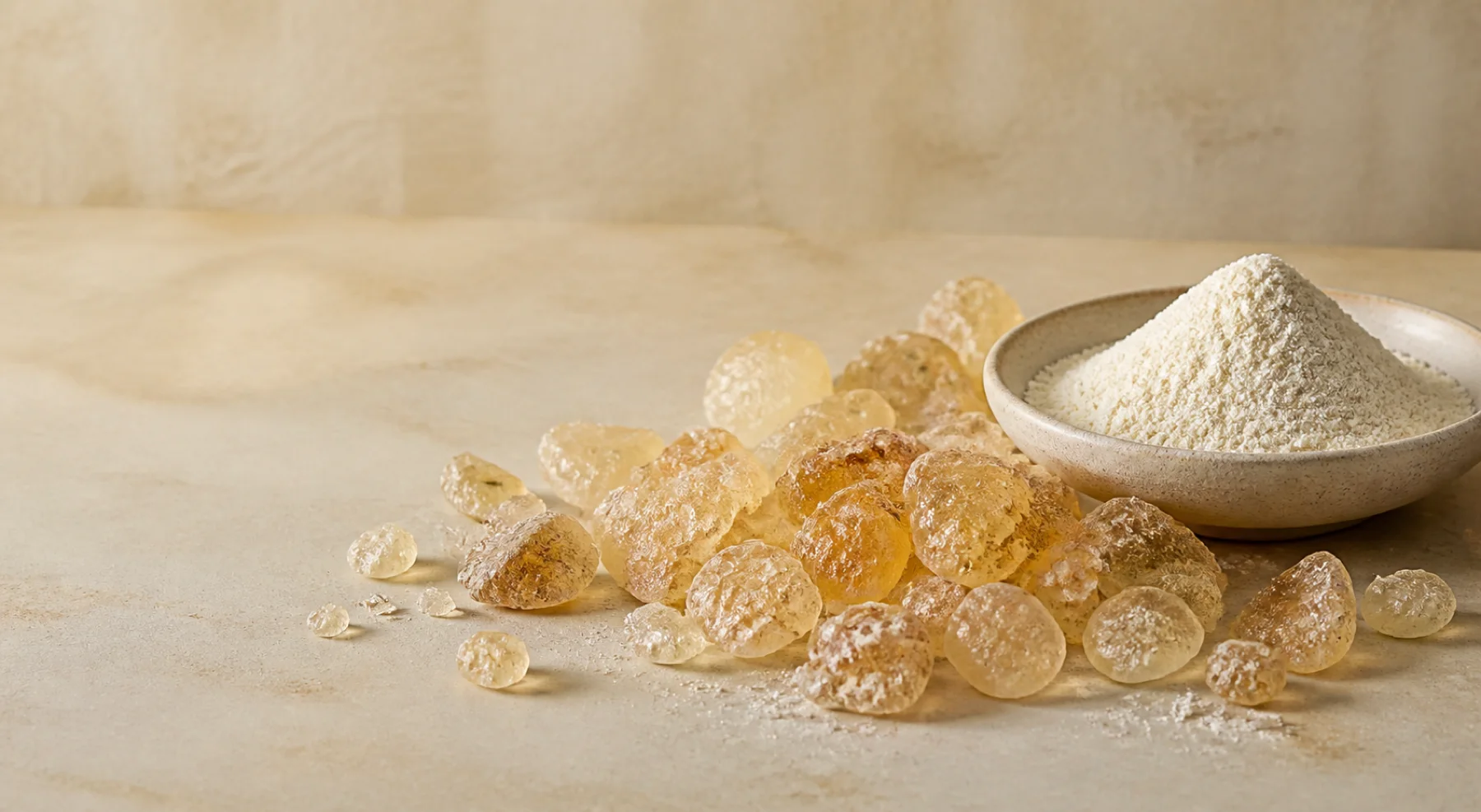
A practical introduction to gum arabic, its botanical sources, traded forms and the questions a commercial buyer should ask.
Read the guide ↗Editable resources for costing, supplier comparison and document review.
Download editable templates for defining a gum arabic requirement and comparing supplier identity, processing, evidence, packaging and commercial terms.
Open tool ↗Model the all-in cost per 25 kg bag and the selling price required for a target gross margin without confusing FOB, landed cost and VAT.
Open tool ↗Check identity, batch linkage, methods, limits and results on a gum arabic CoA—and identify what the document does not prove.
Open tool ↗Move from terminology and species through specifications, processing, applications, logistics and supplier due diligence.
Understand gum arabic crystal grades, species, cleanliness, size, colour, sampling and the acceptance controls to define before purchase.
Gum arabic is plant-derived, but certification depends on the exact product and process. Learn what halal, vegan and kosher evidence buyers should verify.
Evaluate gum arabic in bakery coatings, icings and dry mixes with controlled preparation, application, drying and shelf-life criteria.
Plan gum arabic trials for panning, glazing, binding and confectionery systems using measurable preparation, process and finished-product criteria.
Compare three different hydrocolloids by procurement identity, functional objective, processing trial and evidence instead of treating “natural gum” as one category.
Compare hydration time, lumping, foam, residue and finished performance using a repeatable gum arabic powder trial rather than an informal beaker test.
How the names gum arabic and acacia gum are used, where ambiguity enters, and what procurement teams should verify.
Fifteen practical questions covering product form, specification, evidence, packaging, logistics and commercial supply.
Compare Hashab and Talha gum by botanical source, trade terminology, documentation and application-led procurement decisions.
A procurement guide to Sudanese Hashab gum, Acacia senegal, traded forms and the evidence buyers should request.
Understand what the E414 additive number means, what it does not prove, and how to build a food-grade gum arabic approval pack.
Read a gum arabic specification like a buyer: identity, moisture, ash, insoluble matter, particle size, microbiology and test methods.
Follow gum arabic from collection and cleaning through kibbling, milling or spray drying, with the control points buyers should audit.
How the spray drying of gum arabic works, how it differs from milling, and what buyers should verify for hydration, handling and microbiology.
A staged sourcing process from user requirement and supplier qualification through samples, landed-cost comparison and first delivery.
Specify bags, liners, pallets, coding, warehouse controls and shelf-life evidence for whole gum and commercial powders.
Map gum arabic functions to beverages, flavours, confectionery, bakery and encapsulation—and define application-specific trials.
Turn a beverage-emulsion requirement into measurable gum arabic sample, process and stability criteria.
Specify gum arabic powder size with apertures, pass/retain limits and test methods instead of an ambiguous mesh number.
Map Sudanese gum arabic from collection to delivered lot, separating harvest origin, processing site, shipping route and traceability.
A pre-RFQ due-diligence checklist covering identity, sites, specifications, COAs, processing, packaging, logistics and change control.